HOW AI AFFECTS THE PRICE OF CAMERAS AND EVERYTHING ELSE
Dylan Garcia describes the connection between the rising cost of living and AI. In this poignant article, he questions the narratives around progress and benefits.
By Dylan Garcia
A few years ago, it was almost impossible for gamers to buy a graphics card for their gaming PCs. Crypto-mining speculators were buying up all the available cards to build crypto-mining rigs and, theoretically, print their own money. Gamers who had no interest in cryptocurrency were left paying the price. As AI companies need enormous amounts of memory and storage to train and run their models, we see a similar story playing out again.
The same manufacturers that make the DRAM storage used in data centres also make the more ordinary memory found in cameras, computers, mobile phones and gaming consoles. Only three major companies make most of these chips. They are Samsung, SK Hynix and Micron, and they are already selling almost everything they can produce.
Building new factories takes years, so manufacturers have to decide what to make with the production capacity they have. The more profitable chips for AI data centres are winning.
Photographers are already feeling the impact. SD cards use NAND flash memory, the same basic type of memory used in the solid-state drives needed by data centres. Several SD cards had nearly doubled in price since the end of 2025, while some RAM upgrade kits had doubled or tripled in price, as reported by Jowi Morales in Tom’s Hardware Online Publication in April 2026.
The problem does not stop with memory cards. Cameras have internal memory to run their operating systems and temporarily store images before writing them to a card. Canon, Nikon and Fujifilm have all warned investors about rising memory costs. Canon estimated that the crisis would add roughly ¥50 billion to its costs in one year and said that it could not rule out passing the cost on through higher prices. Nikon made a similar statement, while Fujifilm referred to “pricing measures” and later increased some prices in Germany, as reported by Hillary K. Grigonis for Digital Camera World.
The effects have already grown beyond photography. Sony raised the US price of the standard PlayStation 5 from $549.99 to $649.99, with Cynthia Kim reporting for Reuters that the AI infrastructure race had tightened the supply of memory chips for consumer products.
AI may become an economic supercharger. The central problem with the way AI is being presented is that many of the benefits are promised for the future, while people are feeling the price pain today.
The backlash against data centres
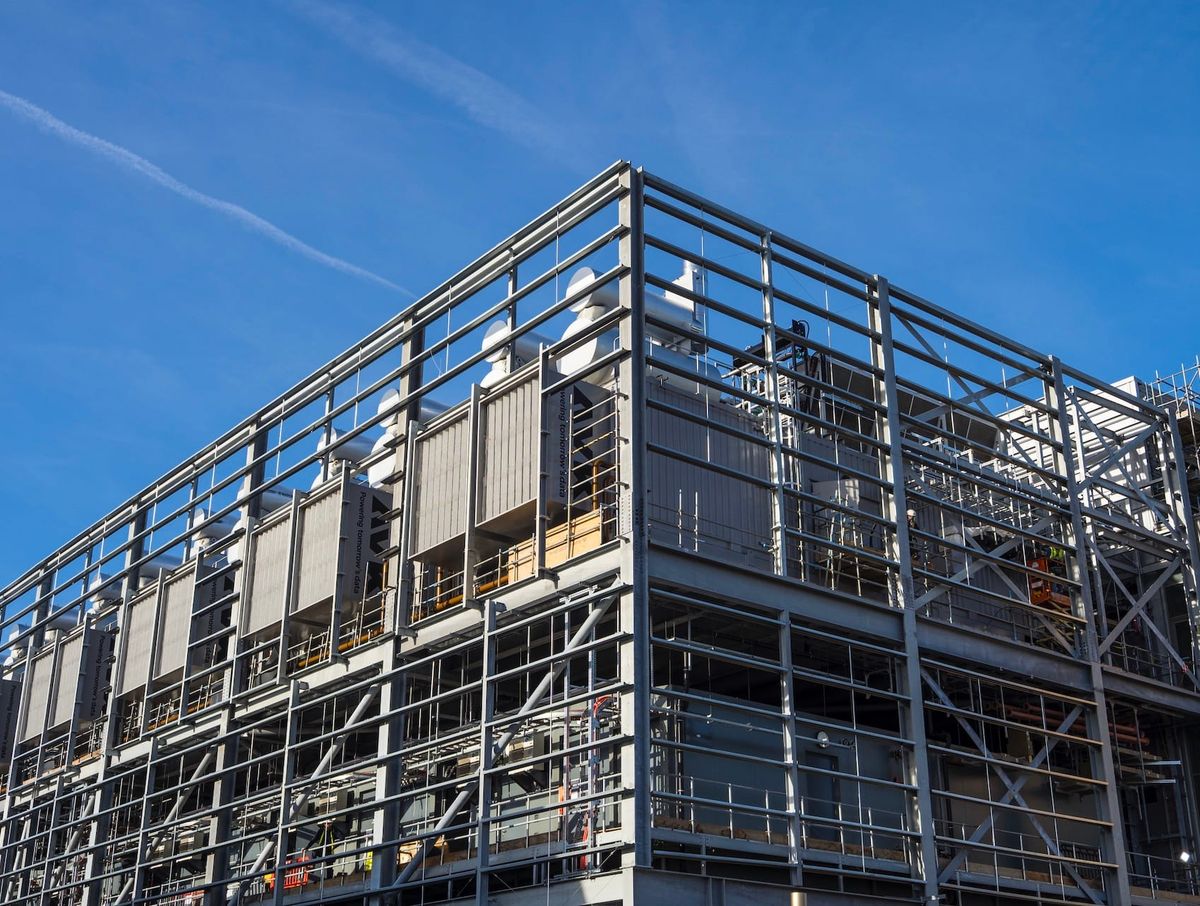
This leads to data centres, where many of these components go, along with large quantities of electricity and water. The case for data centres often begins with jobs and investment. They do create construction work, and building-trade unions in the United States have supported many projects. They can also bring tax revenue into an area.
But the construction phase is temporary; some workers may come from elsewhere, and the number of permanent local jobs may be limited relative to the scale of the buildings, energy infrastructure, and public resources involved.
Water and power have become the focus of the backlash against data centres. Communities are asking whether households and existing businesses will end up paying for the new power stations, transmission lines and water infrastructure that data centres require.
In September 2026, the US House of Representatives passed a bill by a vote of 417 to 3 directing state regulators to require data centres to cover the full cost of the power infrastructure they need. That vote does not prove that every data centre raises household bills, but it shows that the risk is now taken seriously across party lines.
Data centres have consequently become a major issue in the 2026 US midterm elections. The Associated Press reports that opposition has united conservative farming communities and left-wing environmental groups. Their concerns include water supplies, pollution, loss of farmland and energy costs. Candidates from both the Democratic and Republican parties have come out against projects or called for tougher controls.
More than $31 million had been spent on data-centre-related political advertising by August 2026, almost all of it negative, according to The Independent.
Meanwhile, the promises about huge potential benefits from AI continue to be advertised. But where are they? When are we going to see these benefits? Who will receive them?
The hidden meaning of the word "benefits"
The Highland Clearances offer a warning about how the word “benefit” can hide who gains and who loses. Around 1750 and 1860, large numbers of tenants were evicted from the Scottish Highlands and Islands. Landlords replaced shared agricultural arrangements with larger pastoral farms that could pay higher rents.
The change increased landowners’ income, but many displaced people lost their homes, status and means of survival. Some eventually had little practical choice but to emigrate, including to Canada, the United States and Australia. The old relationship between clan chiefs, people and land was also transformed as chiefs increasingly behaved as commercial landlords.
AI data centres are not the Highland Clearances. People are not being evicted across Scotland to make way for servers. But the comparison illustrates how the definition of words such as “progress” and “benefit” is flexed to suit the interests of those behind dramatic economic changes. A development can enrich landowners, corporations or a country on paper while imposing immediate costs on the people living through it.
The arguments for data centres
The strongest argument in support of data centres is that they will be built somewhere. Why not build them in your country or locality so that your country receives some of the investment, skills, tax revenue and strategic benefits?
AI is also presented as the future. If the infrastructure is not built in the UK, will that future be controlled entirely from the United States or China? The United States and China are already in an AI race. Should the UK have its own independent national AI capability, especially when its most important ally can also be unstable?
To further complicate matters, data centres are not only for generative AI. They also support streaming services such as Netflix and Amazon, as well as cloud storage services such as iCloud and Google Drive. People may object to data centres even as they rely on them every day.
The real argument is therefore not simply whether data centres are good or bad, but rather the balance between the national interest and people’s lives today. That includes the effects on jobs, consumer prices, utility bills, water, land, and the cost of living. It also raises the question of who now pays these costs.
Survival and security:
This is the strongest argument and central to the question of whether a country that depends entirely on foreign AI infrastructure may be vulnerable to political pressure, commercial decisions, or failures outside its control. But this argument depends on whether a relatively small country such as the UK can genuinely create an independent national AI capability.
A data centre located in Britain is not necessarily British-controlled AI, so the issue is control, not location alone. It is worth noting that Iran and the Houthis make successful use of AI while being nowhere near the cutting edge, as reported by the BBC and ORF Middle East.
There are strong arguments here too. AI may increase productivity, create new industries and support scientific discovery. But that depends on whether AI delivers the promised economic transformation or whether parts of the market are a bubble.
The public has heard claims about financial innovation before. The UK received all the “benefits” of the 2008 financial crash from its friends in the United States.
Economic well-being also cannot be measured only through investment figures or company valuations. If AI investment raises the prices of cameras, computers, gaming consoles, electricity and water, those costs are part of the economic calculation as well.
National identity and culture
This is the weakest argument for nationally independent AI. Cultures do not need their own large AI systems to have a strong identity. There are several communities in the world with limited access to independent AI infrastructure but a powerful cultural identity.
AI may help preserve languages, archives and cultural knowledge. It may also flatten them by feeding them through models controlled elsewhere. But culture comes from people, memory, language and shared life. They do not come from data centres.

